GLP-1
Supports glucose-dependent insulin release, slows gastric emptying and increases satiety.

Chapter 03
A visual comparison of single, dual and triple receptor programs across GLP-1, GIP and glucagon.
Signal stack
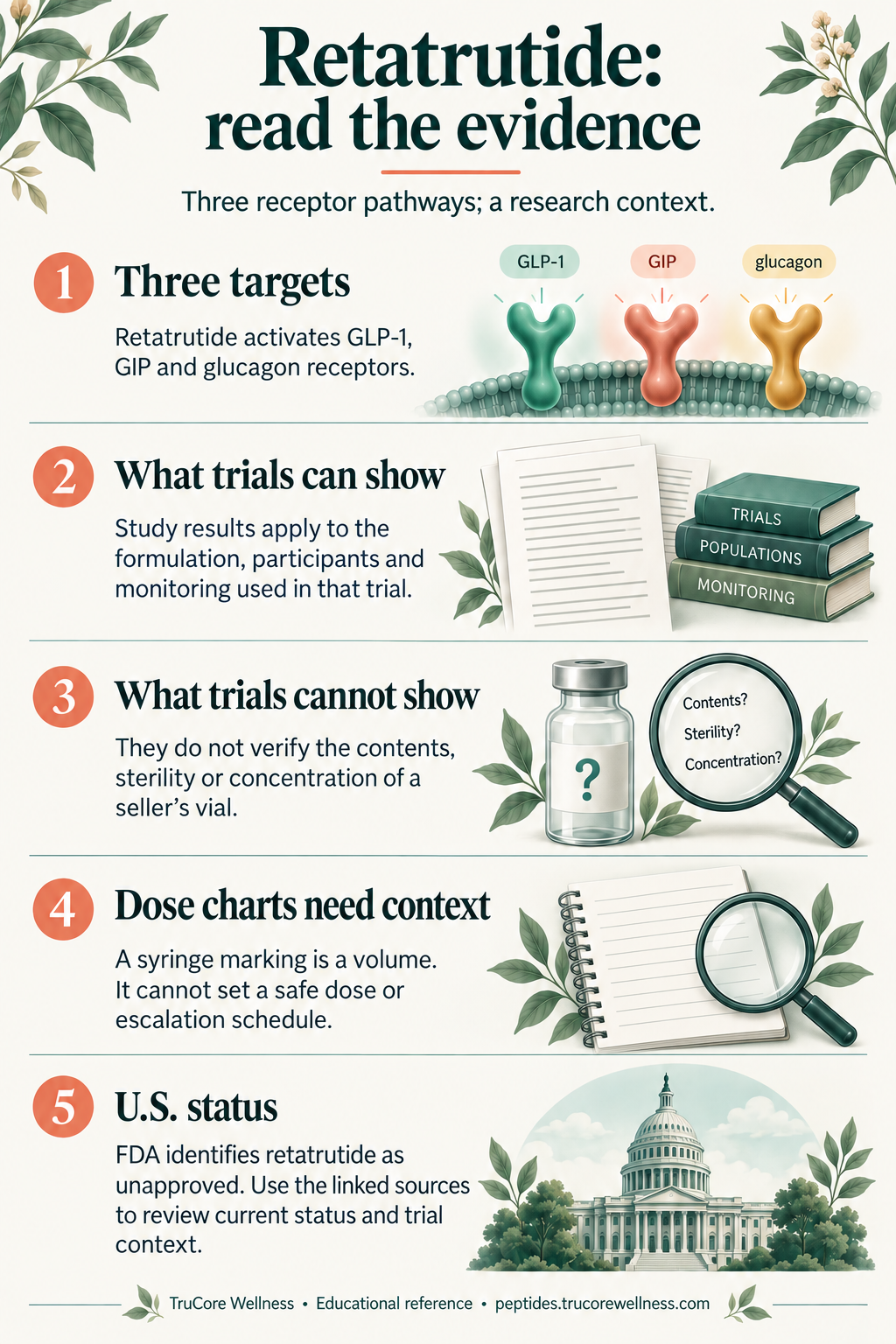
These names describe receptors—not interchangeable products. A medicine can activate one pathway, two, or all three, and that changes both the research question and the safety picture.
Supports glucose-dependent insulin release, slows gastric emptying and increases satiety.
An incretin signal involved in glucose-dependent insulin release and nutrient handling.
Raises liver glucose output; in multi-agonist research it is also explored for energy expenditure.
One incretin pathway: appetite, satiety and glucose-dependent insulin signaling.
A dual agonist combining two incretin signals.
A triple agonist still being evaluated in phase 3 research.
Dual-pathway programs pairing appetite signaling with glucagon activity.
Regulatory checkpoint: FDA states that retatrutide is not an FDA-approved drug and cannot be used in compounding under federal law. Read the FDA notice ↗
TCW illustrated field notes
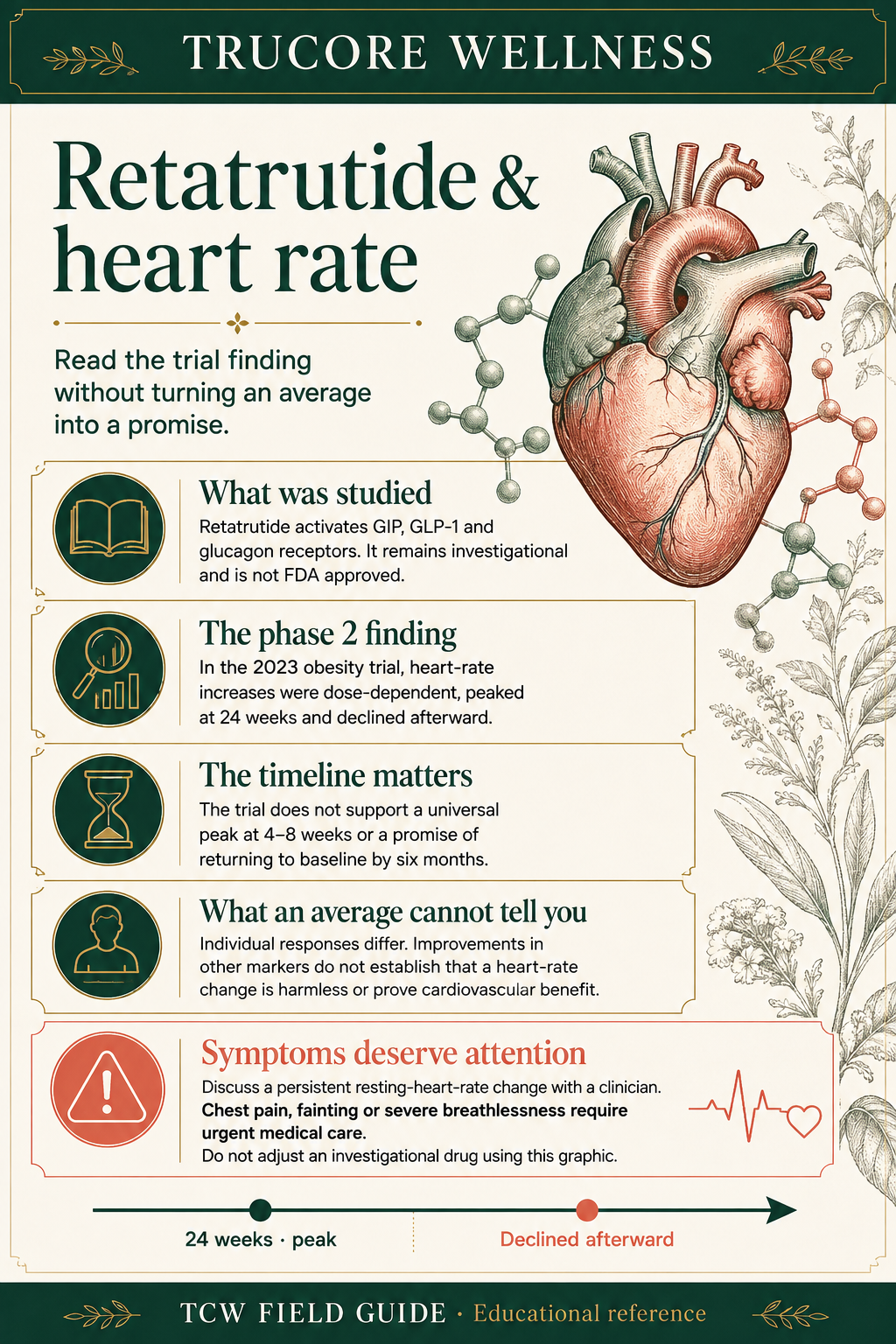
Read the trial finding without turning an average into a promise.
Read the illustrated guideTCW quick references